I have had ‘save the planet’ thoughts take up considerable space in my brain, consistently for the last 7 years now. I was recently in conversation with a mentor and friend (friendly mentor? mentor-ly friend?) when I had a breakthrough. “For the amount of time I have had these thoughts preoccupy my brain, I don’t think I have achieved enough, grown enough in this space.” It was the first time I had said this out loud, and to say that it was a hurtful realisation, would be an understatement.
While I have the general tendency to undermine and undercount my activities and achievements, this one seemed like a tough one to fight my way out by rationalising. I have had a series of ‘it feels like the spark in me has dimmed’ thoughts over the last couple of months, feeling like my awareness acts more as a hinderance than an enabler of late. The world around is designed for skepticism to kick in and survive for longer than necessary. This blog is an elaborate attempt to fight the same.
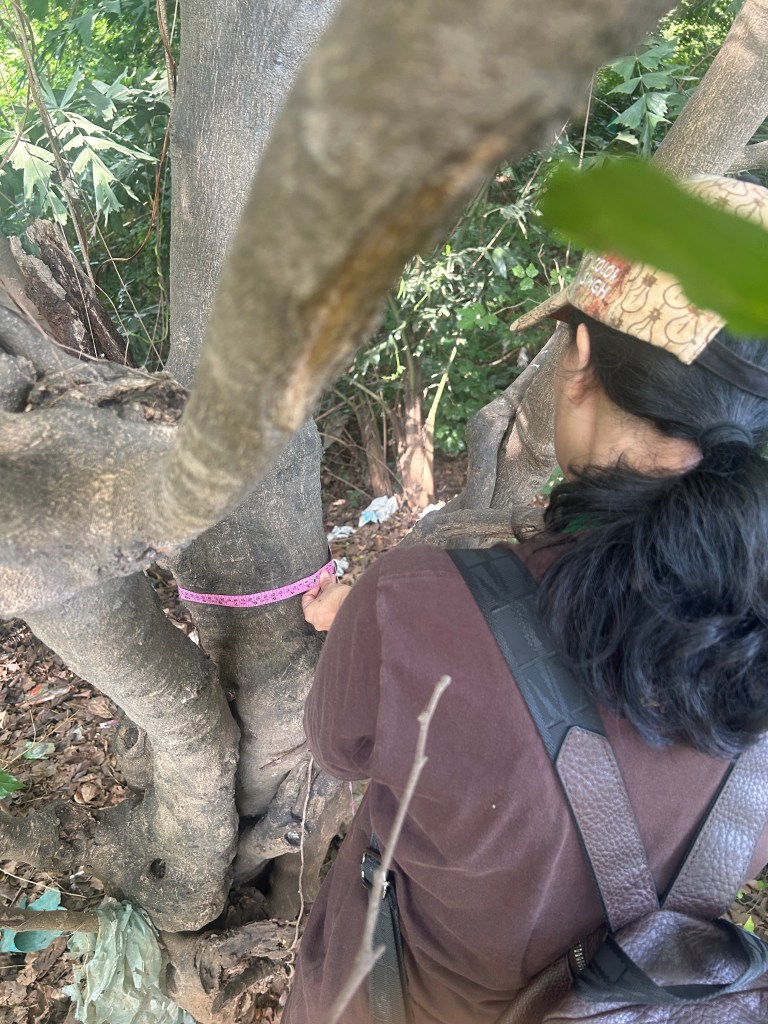
I spent this Environment Day weekend (2 weeks ago) questioning my journey in sustainability, participating in a tree plantation activity on Saturday and a tree mapping one on Sunday, all with the imposter within gently reminding me that what I am doing is not enough, and there is always something better to be done.
Now would be a good time to paint a picture of what it feels like to be in my brain.
If I see carrots being sold in orange fish-net bags, I can’t help but think of some fish choking on it. If I see an influencer cut off the entire strip of their rice packet or the corner of their milk packet in their what I eat in a day video, I think about the tiny pieces of plastic losing their way along their recycling journey.
I have continued using a shampoo bar even thought it made my scalp feel extremely itchy. I have taken the bus over an auto or a cab because it is better for the planet and the pocket. I have bought shoes that felt a little uncomfortable and looked different than what I would like because they were made from recycled PET bottles. I have stayed thirsty for a little while longer because I did not want to buy a one time use plastic bottle. While I flaunt my brain function, I must instate that I have the security (net) needed to make these choices. In a world where a secure job tends to be a luxury, expecting people to make ‘inconvenient’ choices with inconceivable benefits over immediate needs does seem like a far fetched, rather unfair dream.
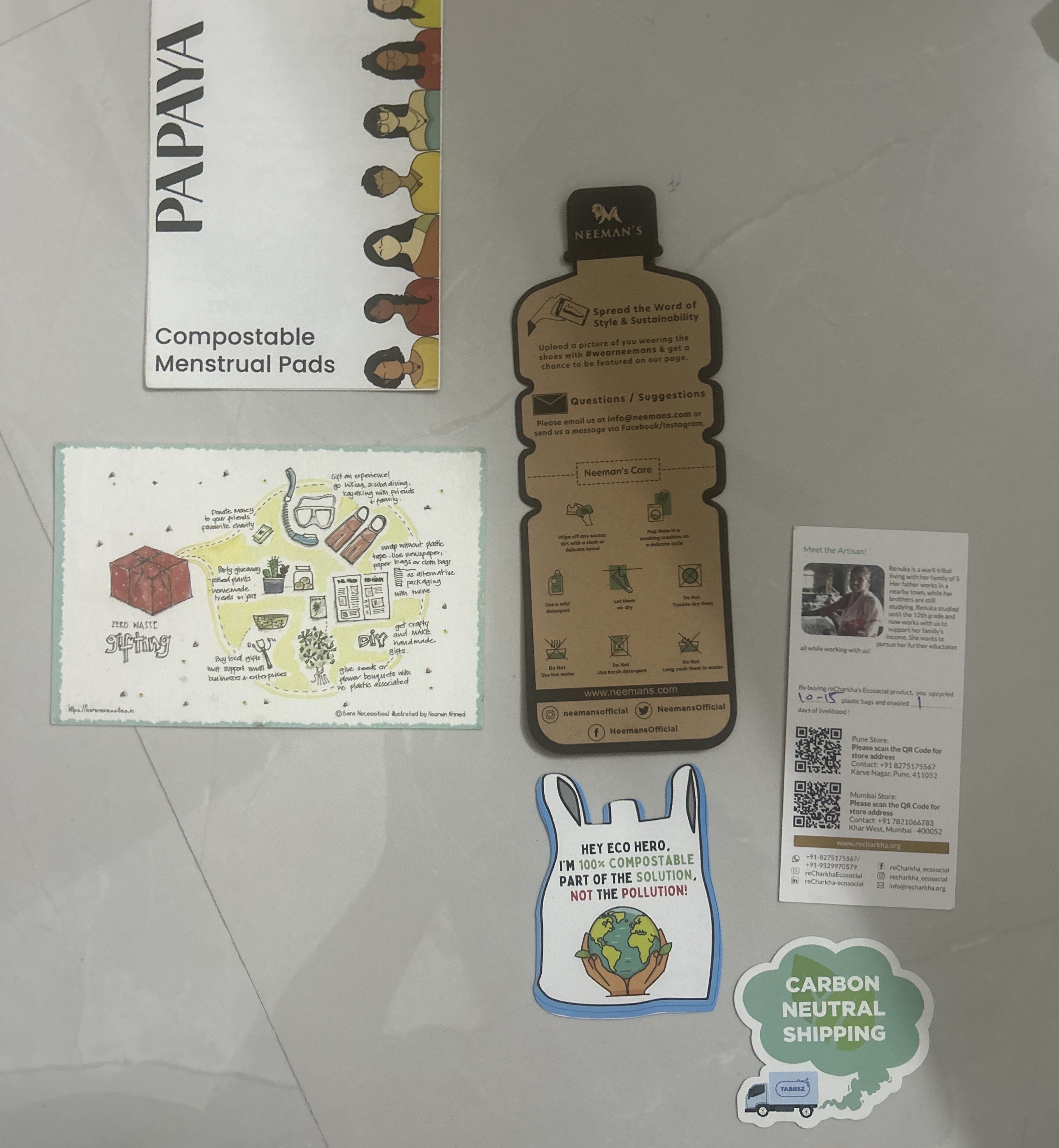
Over the course of my current read— Ecological Intelligence by Daniel Goleman, I have come to perceive all my heavily interwoven thoughts about environmental consequences as a skill. The con of this ‘intelligence’ or sensibility, is how easily the thoughts can turn into cynicism. I often find myself thinking about how every effort to make convenience the priority (AI, quick commerce, consumption as a success indicator) ends up putting ‘care’ at the back burner. Am I really making a larger difference by denying plastic bags every time I am at the vegetable vendor? Am I really winning if I am losing 2 hours of productive time travelling by bus when a car would have taken me half the time? I often find myself thinking that the world would have turned out differently if ignorance was not rewarded with bliss. In an attempt to reflect, I traced care patterns, mine and others’ to arrive at some questions.
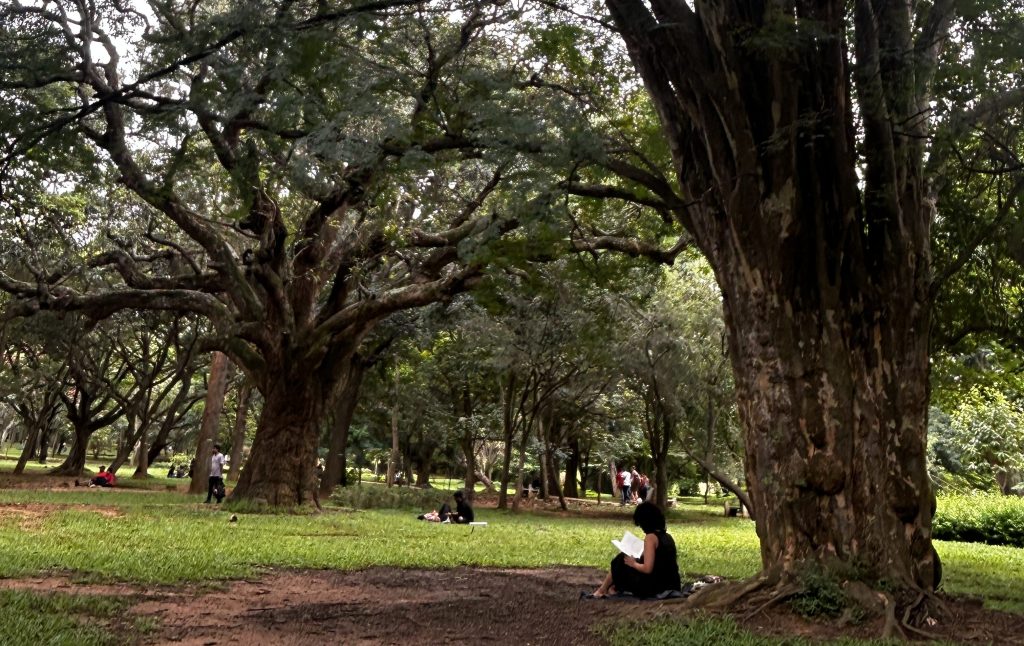
Why is it easier to love nature that is away than it is to love nature in your own city or neighbourhood? The answer might be similar to the following question: Why do I find it easier to notice the nuances of a city I am new to than the city I have grown up in? The realisations become more complex and interesting as I dwell upon similar questions. Should time and a generational connection to a place not deepen the relationship? Acknowledging that there is most definitely never a one-size-fits-all framework that explains relationships and emotions and behaviour, the question I try to raise is this: how do we normalise long term collective thinking in a world that rewards the opposite?
In an attempt to not sound preachy and question my questions, let me ponder on another example. In my recent travels for work, I noticed how shops in remote villages tend to have a lot more products being sold in single use portion sizes in plastic sachets. Easy reasoning, the small portions make them affordable for people with less disposable income. In an ecosystem where waste collection infrastructure is not in place, while sachets bring in affordability, they also leave degrading disintegrating plastic all around, and release toxic gases when burnt. Same pattern yet again— short term gains translate to long term cons, only here- short term thinking is a survival mechanism and long term thinking, again a luxury. But the more important dots to join here? The ones struggling to survive are the ones paying the larger price. At what point does it feel right to request those struggling to survive, to make a better environmental choice?
In classic skeptic fashion, allow me yet again, to build on the question, as I break it down. The premise of one of my key projects back in college was this: the challenge with getting people to care about the environment is that it is often easier to perceive, notice and feel the meagre effects on the environment when a woman is burning firewood to feed her children as against understanding what happens to the environment when I dump a perfectly fine piece of clothing or choose to buy a snack with palm oil, both scenarios where fleeting trends and momentary hunger overpower long term consequences.
Long term thinking has a sibling— place based thinking. They have a cousin too— people first thinking. In an increasingly interconnected world, alienation grows steadily. I have neighbours I can’t name, friends I can’t always help, and monkeys I can’t rescue because the circus master is not my friend. I perceive international catastrophes before I notice that a tree in my neighbouring compound is in distress.
In classic ‘Universe trying to mess with my head’ fashion, a day after environment day, I came across a myna flipped on its back and stuttering, too weak, hurt or shocked to be on its feet. While I was struggling to turn it back on it’s feet, an uncle, seemingly confident about what needs to be done offered to help. I had run into someone who rescues cats and dogs while I was trying to do the right thing. We drove to a rescue center and dropped her off. The hypothesis was that she got injured after falling off a branch because of a heat stroke. I don’t know what happened to her after, but I know I was offered help in a moment when I needed a brace to hold my beliefs, for them to heal from a series of hairline fractures, possibly like the myna herself.
I am well aware the metaphor has overstayed its welcome; allow me to conclude.
While coincidental reassurances are always welcome, I was reminded to analyse my journey to understand: what brought me to care?
I often ask myself, what is it that has made me an empath when it comes to environmentalism? Why do I care? Beyond best out of waste crafty projects and autobiographical essays of rivers and trees in school, my journey into ‘conscious caring’ and more importantly, constant bubble bursting started with a class on the sustainable development goals in my first semester of college. I like to think that while I was an ‘I love nature’ person until early in college, I became an ‘I cannot say I love nature if I do not take a stand when something fundamentally wrong is being done to her’ by the time I graduated. My classes honed me to think of my role in the larger picture, pushed me to connect the dots and I believe it was the constant exposure that got me to care despite being generally sheltered by the worst.
Over time, this lens of seeing the world became more of a second skin, and most people in my circles not seeing the world the way I do, became isolating. If I have learnt the way to (over)think the consequences of my actions, how can I create safe spaces for people to see the cons of theirs? The question possibly needs reframing. How can I stop trying to grow as an individual and grow as an active shaper of systems around me?
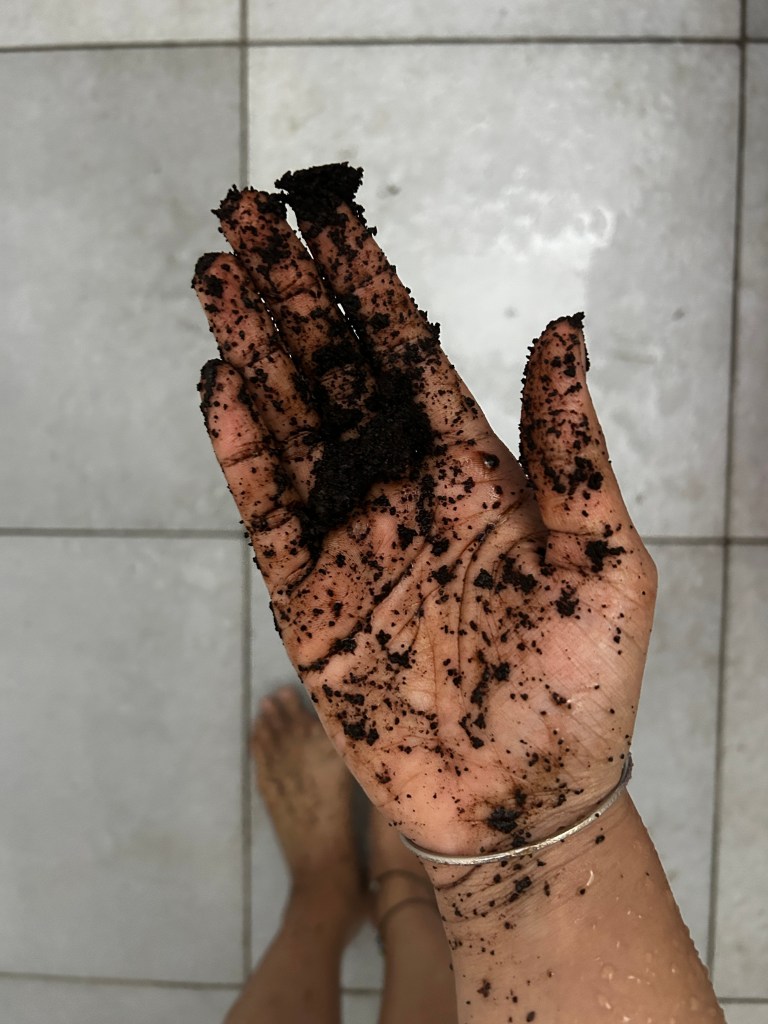
Me using coffee grounds for my plants and as a scrub for my skin instead of throwing them all in my wet waste bucket is great, but a vegetable vendor having a designated cow herder regularly pick up all the usual vegetable waste as fodder for his cows is better, especially when waste management systems in cities are overburdened and most waste ends up in landfills.
When I look back, I have been able to upcycle only about 2-3 out of every 10 things that I have intended to, and I know exactly what has stopped me at various points:
– space to store the materials (either too big, smelly or possibly injurious),
– support, company and motivation (holding on to ‘waste’ is often associated with bad energy, most people are hesitant to deal with waste),
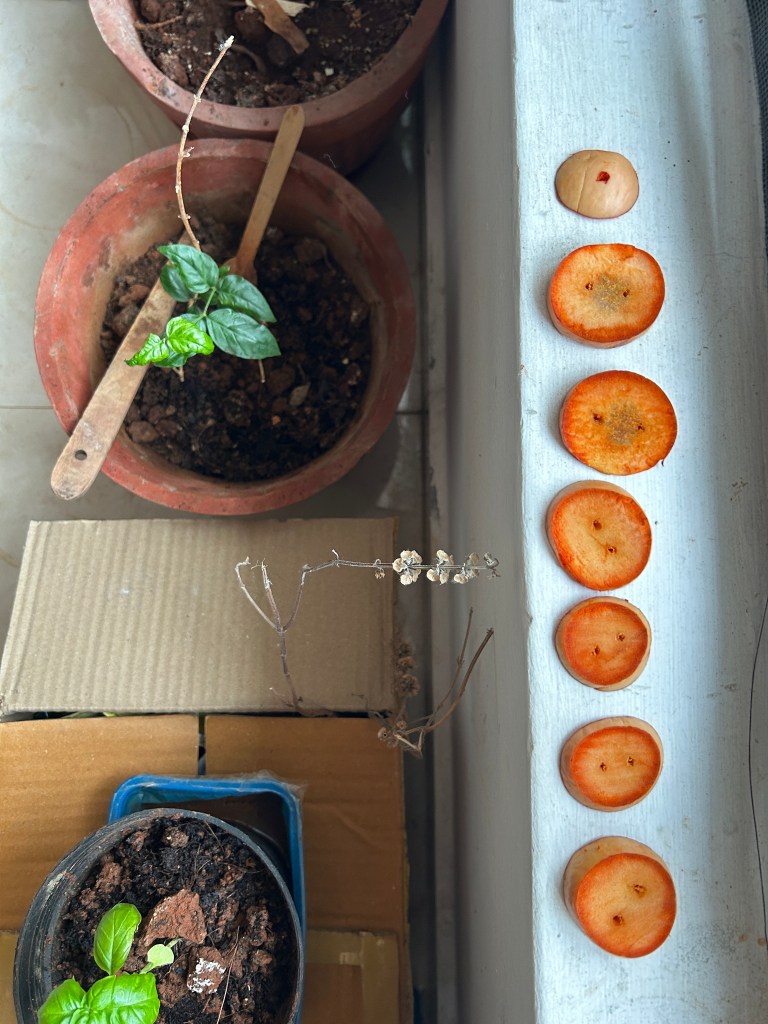
– resources and skills (I can slice and prick avocado seeds to turn them into buttons but I don’t have the sun to make sure it dries without growing mold OR I want to turn a random set of old watches into a cool decor piece but I do not have the tools to meddle around with those kind of materials)
LOTS to fix, yes. But here is a thought I find invigorating: the moment palm oil goes out of picture, it is not just a better decision in terms of our bodies, but also the health of the planet. The minute fast fashion becomes uncool, the entire system supporting bad labour conditions dismantles. While there exists a larger than life vicious cycle, there is an alternate dreamy virtuous cycle (for which to come into being I believe we must collectively lift and flip the current cycle upside own; imagine the tire flipping Crossfit exercise, except a colony of ants is flipping a truck tire).
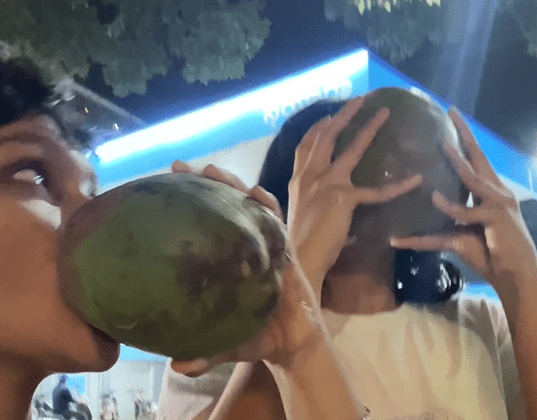
While I dream big and try not to hate the word hope, I see wins and losses. I still struggle to make sure every single bit of waste gets segregated well at home, still struggle to convince people that while systemic change is the push we need, individual action must not take a back seat. When I was recently asked for ideas for sustainability-related projects for students from my school, I could look at the list and say that it would have looked very different 3, 4 or 5 years ago. It bothers me that most of my friends still don’t say no to plastic straws when they’re having coconut water, but I know quite a few of them think of me rejecting the straw, and spilling some over my shirt as I enjoy my drink with the coconut flipped upside down over my head. I think I will take that as a win while I plan for what’s next.


Leave a Reply