On navigating the art of performance, science of conservation and finding my voice (all as a student)
This blog talks more about my journey through the project, more than the project itself. While the blog primarily uses text and photos to get my story across, once you scroll to the bottom of the blog, you’ll find chapters of my process in a video format. I went around obsessively recording my experiences and thoughts as they changed through the course of this project, and I have put them together, chronologically documenting my process. For a deeper dive into the journey before you watch the movie, read away!
In his last book ‘Tree Tops’, Jim Corbett candidly talks about his view from a tree house in the middle of a clearing in a forest. While most people do not have access to forests at the magnitude that Jim Corbett did, I can say that I have enjoyed my privilege of travelling around the country during summer breaks, quite a bit with the intent of learning too. Be it the bustling lanes of Rajasthan, yellow taxis of Kolkata, hot and thick forests of Ranthambhore or the backwaters of Kerala, I have relied on my travels to burst my bubbles from time to time. While working on this project, what remained a point of attraction for me was the field work. It always came with a set of surprises, unexpected perspectives and unknown stakeholders, something that fuelled my curiosity.
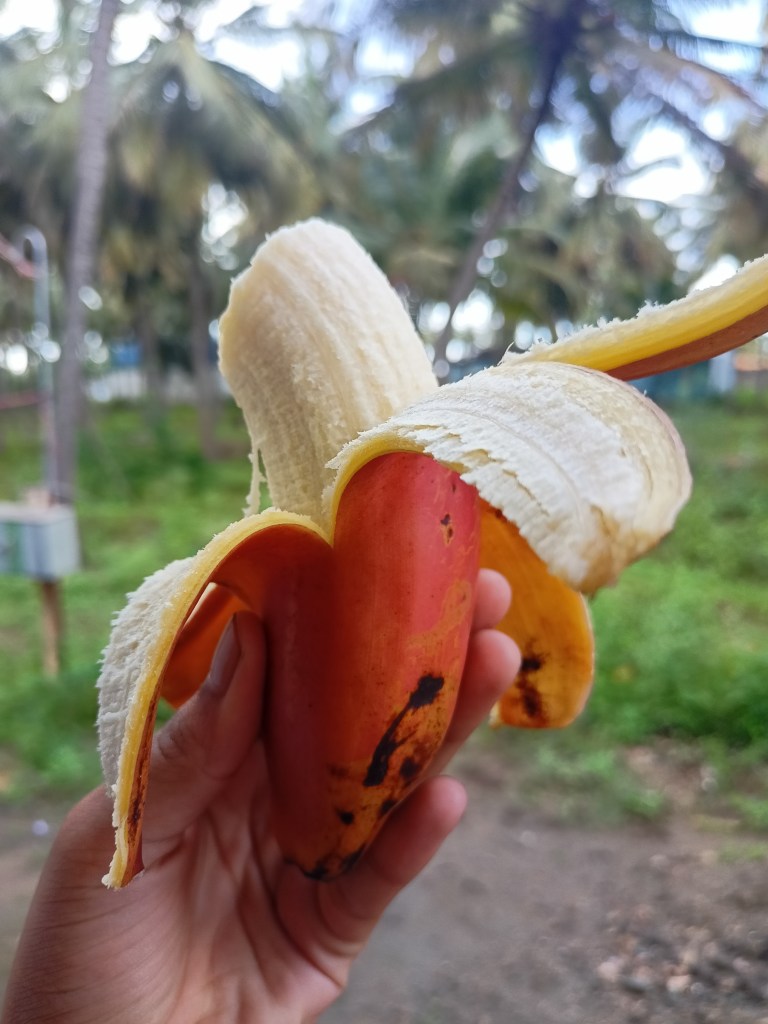
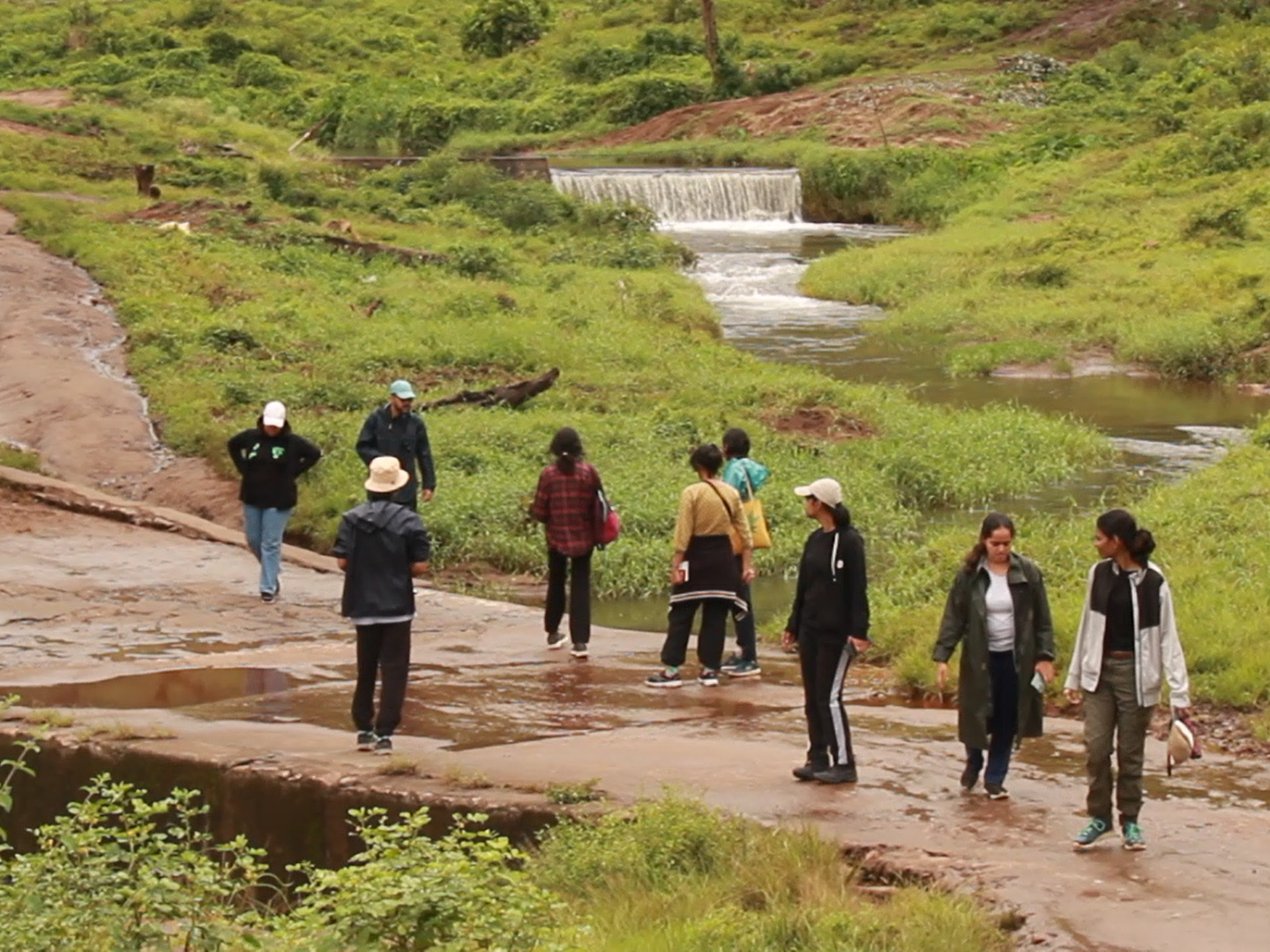
Known for the hairpin bends that lead to this home of tea estates, our trip to Valparai became a big experience in critical thinking. Why are the tea estates placed here? What kind of a landscape was there in Valparai before the tea estates took over? What are the tall trees in the tea estates? How do the elephants migrate if the forests are fragmented? Many such questions were raised and they led to elaborate discussions of ecology, politics, history, tourism and more. These questions led to a line of enquiry and many ideas to let go and build on. This project began with me wanting to explore the pillars of empathy, theatre and accessibility in the context of human animal relationships (not surprising that the start was chaotic and all over the place). Eventually, I narrowed it down to building a picture of sloth bears and the socio-political narratives that have revolved around them over changing times- all through an immersive play.
Working on a project for too long often makes one think in circles. When that stage arrived, it took me lots of reading and discussions to understand that there is no one kind of human animal relationship, and that realization unfolded my work. As a designer who was trying to understand the world of conservation, I tried to figure out where ‘I’ came into the picture.
Can we ask how many bears might have been affected by clearing of forests for palm oil, growth of industries? Can we assess the impact that our lifestyle has on these animals and then compare that to the impact that the lifestyle of adivasis (or people living in close association with forests) has on them?
Essentially, I looked at how relationships of humans closely living with animals and nature is affected by lives of people living far away from them. I wrote a play, brought together a bunch of people to enhance the story and dialogues, improvised with my team to bring life to it. It gave me joy to see that the project then stepped outside the classroom.
To reach a wider audience and to help with finances for the performance that I had envisioned, I collaborated with Bangalore Design Week. Since such a huge festival was taking place and Srishti as an institute was a part of it, it only made sense to grab the opportunity.
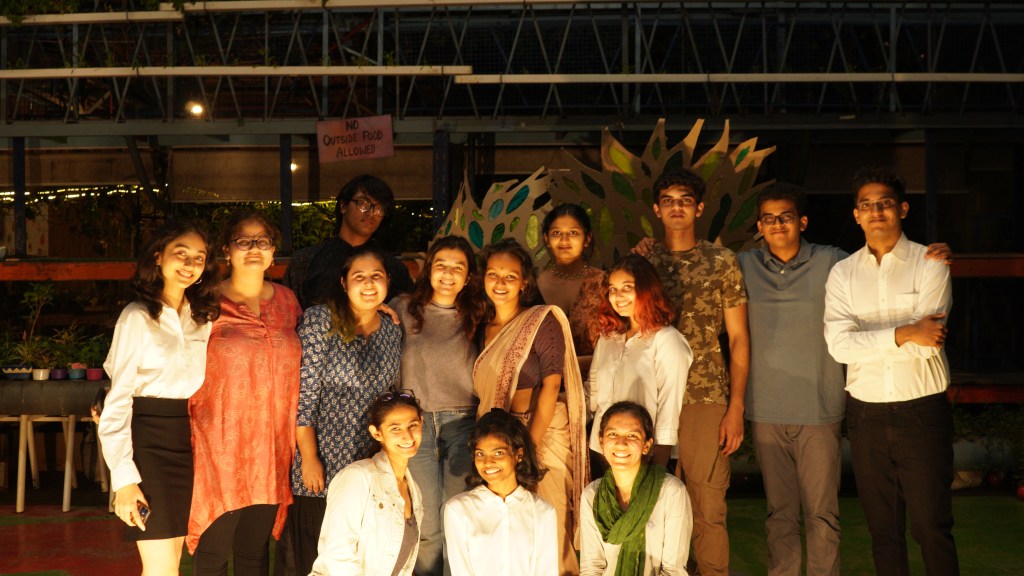
The project had already extended way beyond being a one person’s project, and it became a great opportunity for the college’s theatre group (Mandali) to break out of the college bubble. To ensure that this production that talked about sustenance and sustainability did not just ‘talk’ about it, we tried to use a lot of scrap material like cloth, discarded wooden planks and discared pipes to build our props. The money was spent on more non negotiable items like corrugated cardboard, cloth for backdrop and lights for a dramatic effect that would enhance the play.
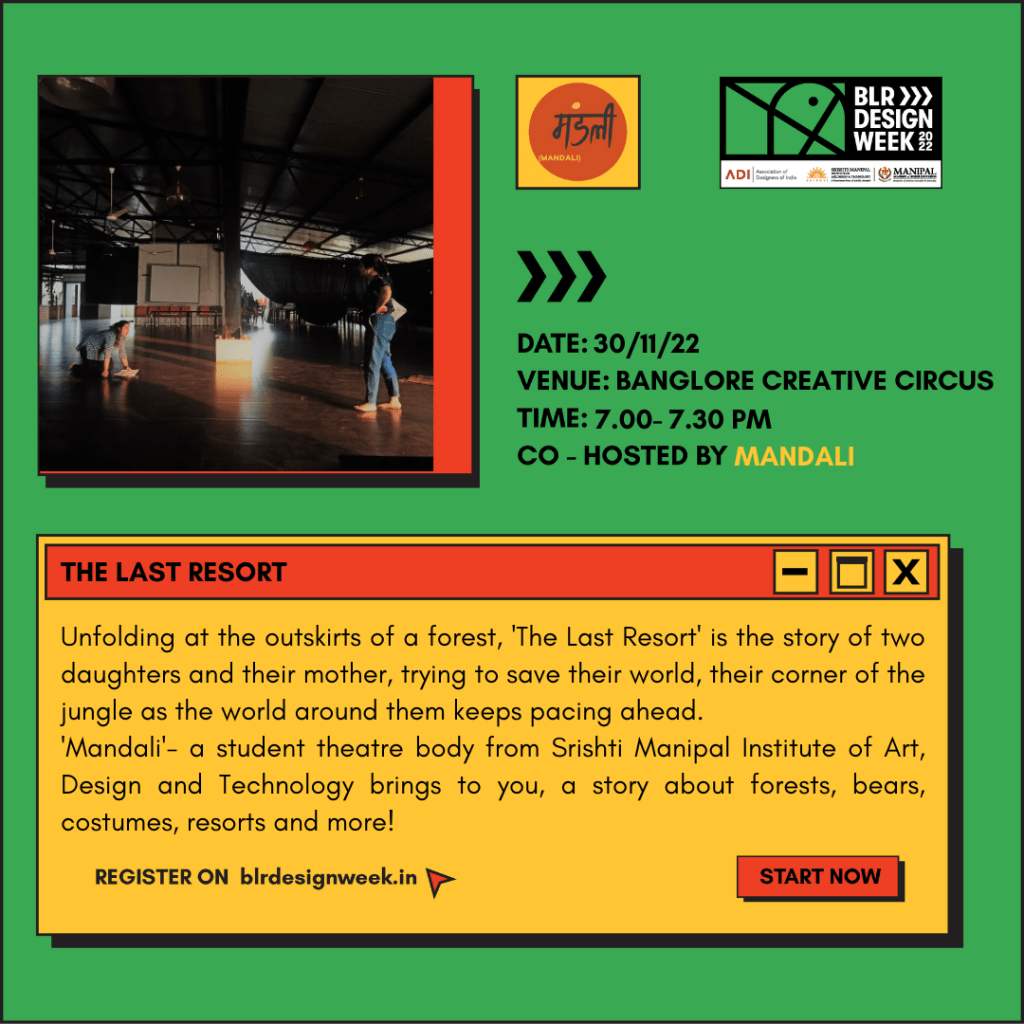
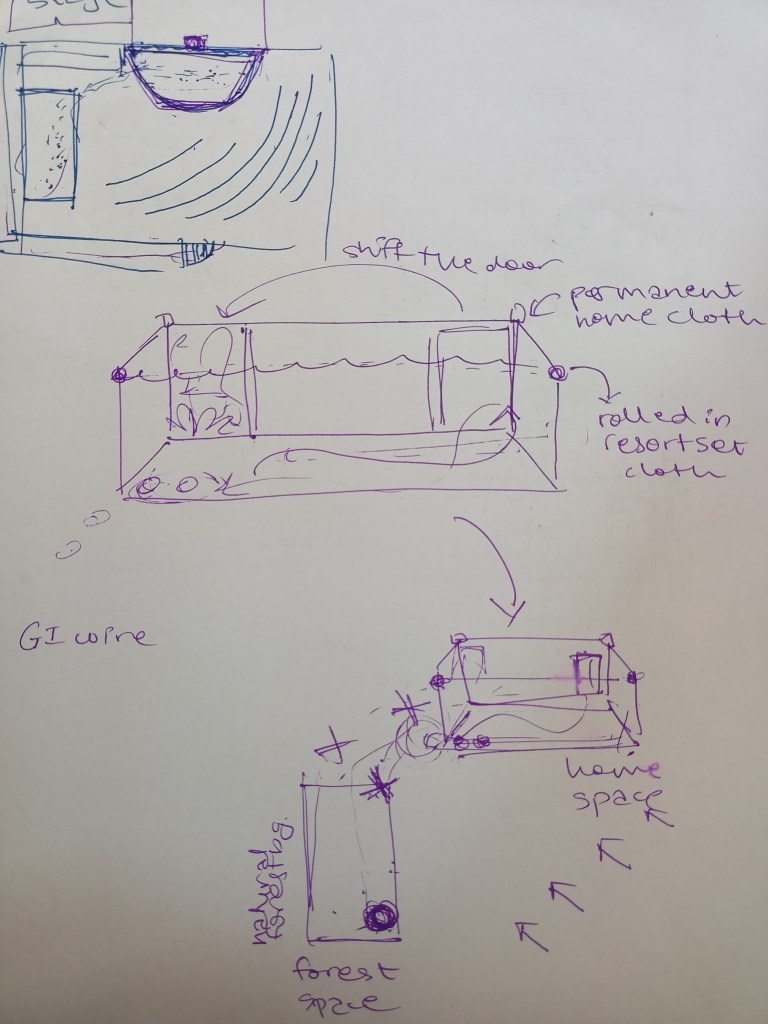
Bangalore Creative Circus, the venue of the play opened new doors too. I broke out of the standard definition of a stage and played with elements in the alive green space that BCC is. During the performance, instead of changing the ‘set up’ in one space, the very ‘stage’ kept changing, and the lights helped to tell the audience what to look at.
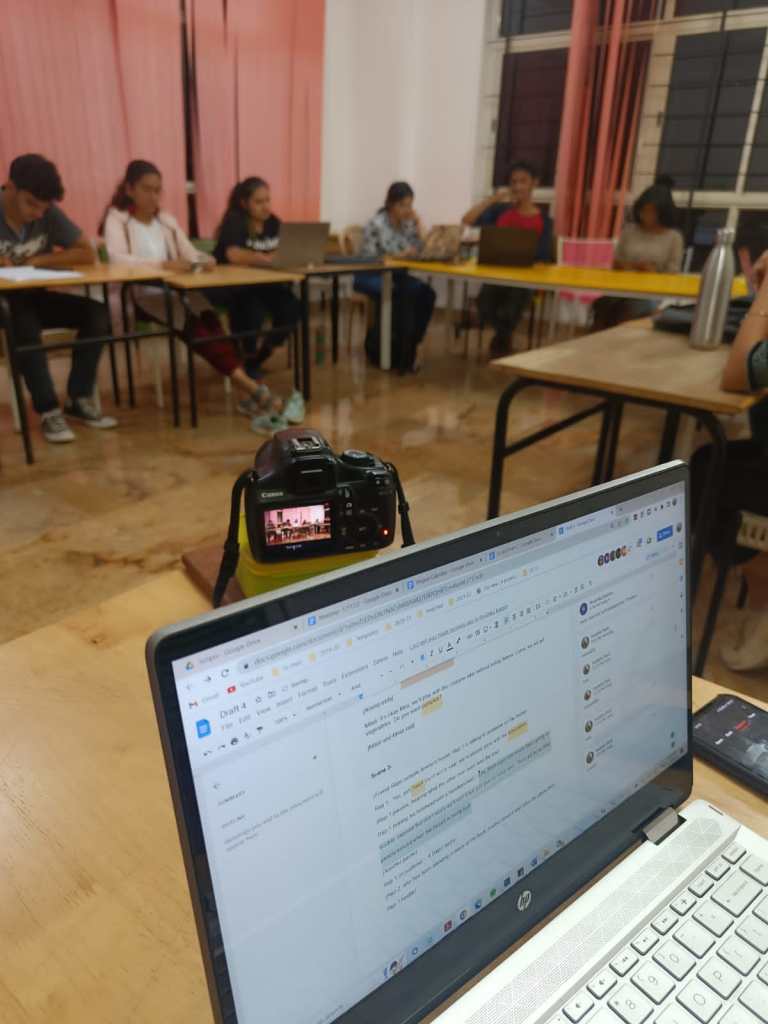
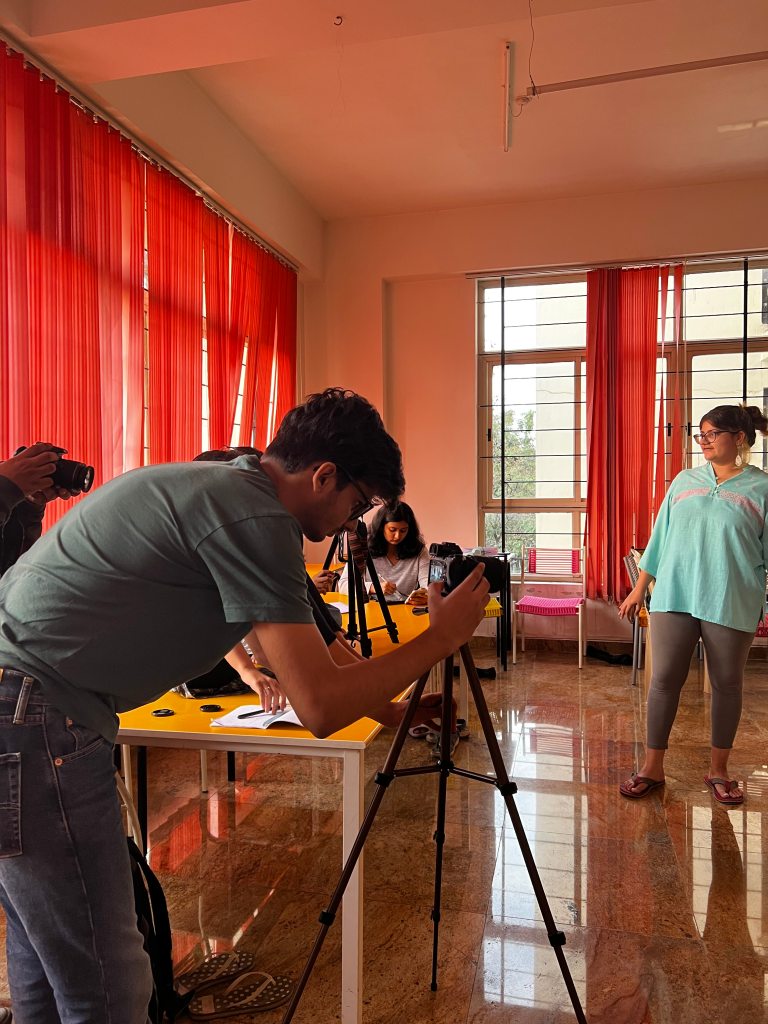
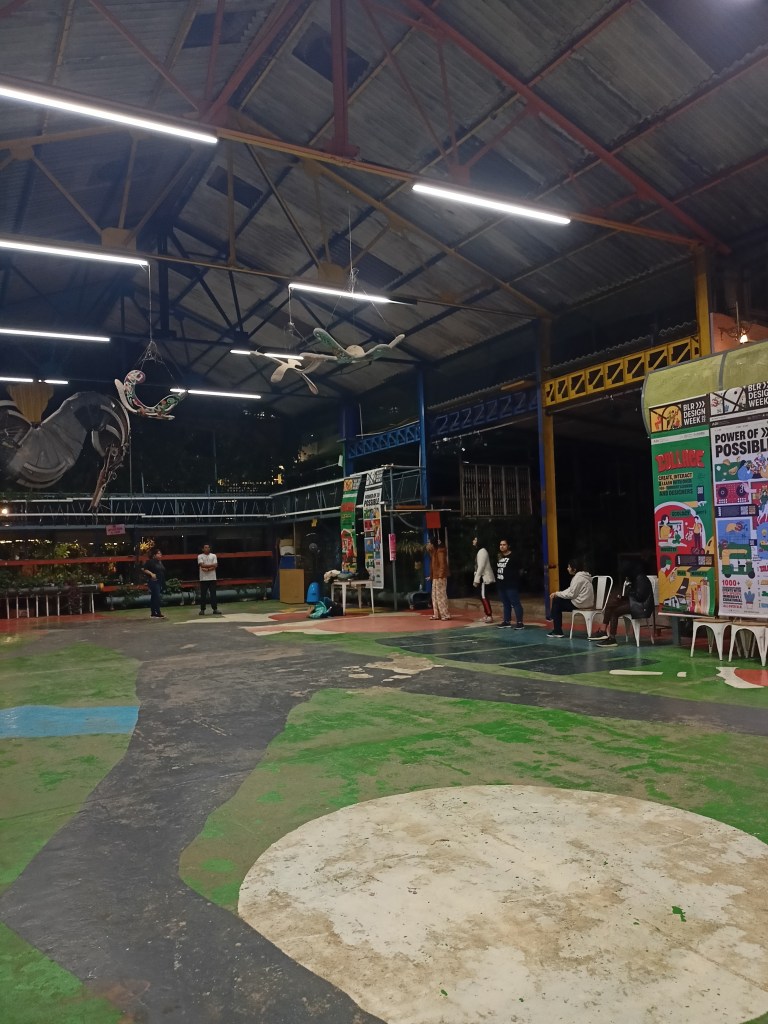
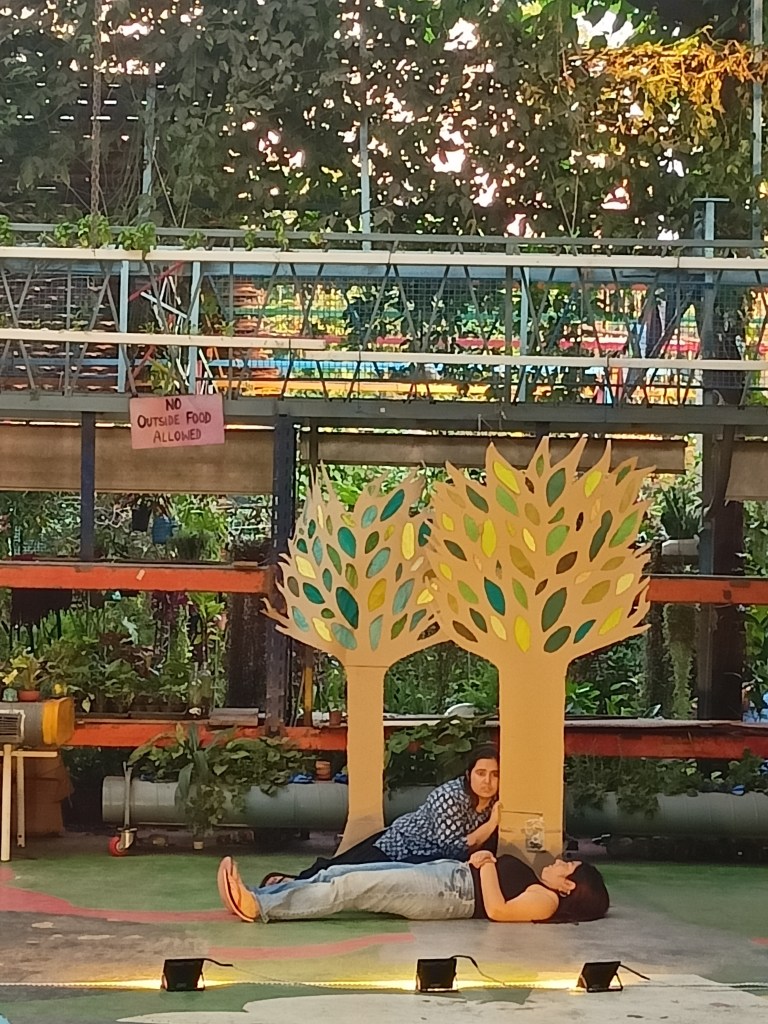
The project trajectory started with me studying animals and led to an understanding of human hierarchies and systems our their interactions with sloth bears. Initially, I wanted to work with tourism as one of the pillars of the project, but I had to let that element go. Later, it very subtly became a part of the narrative, something I realized after the production went up.
I believe that when we end up putting endless energy into our projects, our subconscious helps us reach our vision. As long as one can critically look at their creation, these subconscious contributions become wondrous details. I breathed, ate, exhaled my project for about 4 months, and the videos that follow are a testament to my longest professional commitment to myself. They reflect everything I went through on my journey to say “I just wrote, directed and put up my first play!”
 Vee Documents
Leave a comment